

How To Make Comic Book Templates In Google Draw
This post is co-authored past Ditch That Textbook's Matt Miller and Cori Orlando, a teacher on special assignment (TOSA) from Simi Valley, California. Find her blog, Leading in Limbo, at leadinginlimbo.weebly.com.
We (Cori and Matt) are betting that comics are a memorable part of your childhood, whether they were the color comic strips in the Dominicus newspaper or comic books.
If not, then it was probably blithe comics — cartoons!
They're visual. They're colorful. Adults and children alike flock to animated movies at theaters when they're released.
There's a draw that comics have on our lives. Graphic novels and comics draw in reluctant readers, and making comics taps into our students' creative side.
Quinn Rollins writes this about comics in his book,Play Like a PIRATE:
It's funny that we endorse combining pictures with words as a good style to tell stories to immature children, just as they get older, we want children to carelessness their movie books. I'd argue the things we valued as children still have value for us as adults — and at every age in between.
Comics in the classroom
There is ability in students having to go through the artistic process. They need to synthesize their thinking in order to produce. Higher level thinking occurs when students create a not-linguistic representation of their ideas.
Plus, it lets students tap into their inner creativity — which is a fun and fifty-fifty effective practice in the classroom. Letting students pursue their inventiveness not only increases students' engagement in grade but also empowers them to have ownership of their learning.
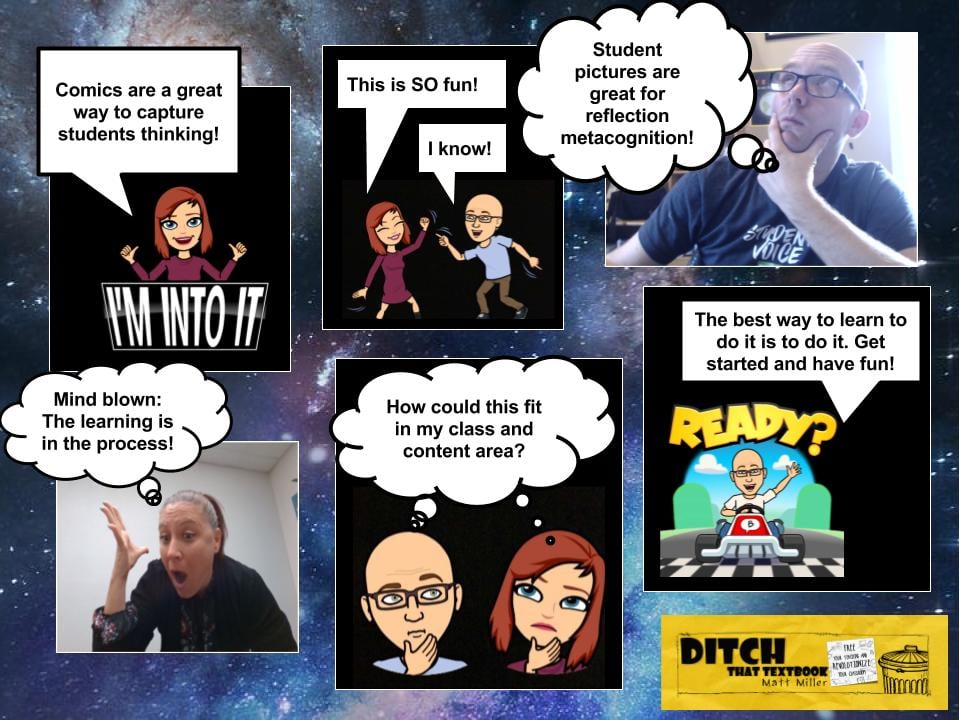
Here'south an example of what a comic strip in Google Slides or Drawings could look similar! Click hither to encounter the original Google Drawing file. (Feel gratuitous to File > Make a copy … just delight don't inquire for editing rights!)
Google + comics = greatness!
Google Drawings and Slides is a great medium for giving students this artistic outlet. Information technology lets them create a framework with shapes, add together speech/thought bubbles, and insert images in one place.
- Use Google Drawings if y'all want your comics to be on a single prototype. (Think of it like a digital sheet of newspaper or a poster lath.)
- Apply Google Slides if you desire multiple pages. (Call back of the slides similar the pages of a comic book.) I (Cori) Dearest using Google Slides with students because they accept access to the "explore button". It is a quick mode for students to find images (rather than having to open a new tab).
Here's a quick walk-through of how we'd become started making comic strips in Drawings or Slides …
Pace ane: Fix up the framework of the comic
You can create a four-panel comic strip equally just equally with two lines (horizontal and vertical) to divide it into four equal sections. Here'south a template so you can see it.
PRO TIP: Hold in the "shift" central while drawing lines to make them perfectly horizontal or vertical.
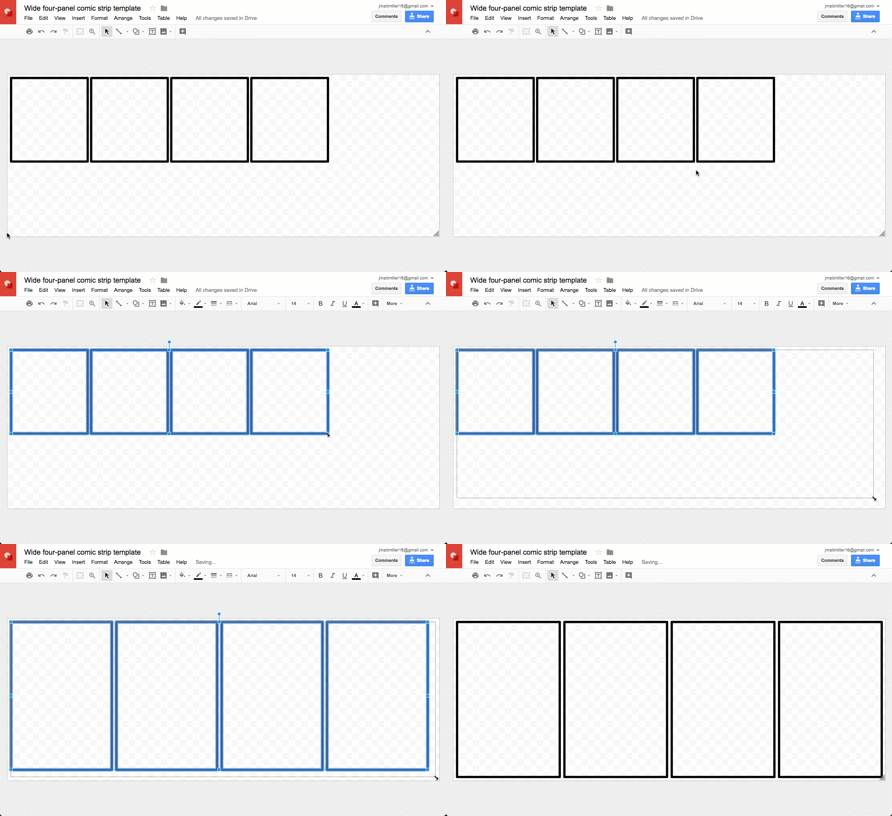
You can resize your Google Drawings or Slides to make them wide like traditional newspaper comic strips. Go to File > Page setup > Custom. Choose the size you'd like. In this template, I made it 8 inches broad and iii inches alpine.
PRO TIP: Draw a rectangle. Copy/paste information technology as many times as you need information technology. Arrange them next to each other with equal spacing in betwixt. And then highlight all four rectangles and resize them at the same fourth dimension to fit the folio! (See image at right.)
If you're feeling brave, actually mix information technology upwardly! Here's ane I (Cori) created where the panels aren't anywhere near the same size! The outset slide has drag and drop speech bubbles and callouts that might assist your students in getting started.
Pace 2: Add images
You have SO MANY options for adding images to your comics! Hither are some of our favorites:
- Take your own pictures and let students be the stars of the comics! This is i of my (Matt) favorite means to personalize comics with students. Apply the Alice Keeler Webcam Snapshot Chrome extension to have a webcam picture. When it saves to Drive, just insert it into your comic from Bulldoze. They can pose, apparel up in character, bring in props, etc.
- Find your favorite of these Creative Eatables or public domain image sources: Unsplash, Creative Commons search, Pixabay and more. (If you accept a favorite that didn't brand the list, add it in a comment at the bottom of this post!)
- Use Bitmojis! They're these fun cartoon versions of yourself. Get to bitmoji.com and set yours up. Add the Chrome extension to your Google Chrome spider web browser and elevate them right on the page.
- Note: Some Bitmojis images aren't advisable for younger students. An alternative: create some Bitmoji images alee of fourth dimension and relieve them to a folder in Google Drive (open up the folder in your web browser and elevate the Bitmoji images in that location … or salvage them to your device and upload them to the binder). Then share the folder with students.
- Add icons from The Noun Project (thenounproject.com ). These icons can add to what you're creating in your comic — or serve every bit props or extras for your characters! If you're using the gratuitous Creative Commons version, exist sure to put a niggling attribution text box somewhere in your work.
Pace 3: Smoothen it off
Add together a background backside the panels to make it pop. Use images as the groundwork (can use Creative Commons images through Google search inside of Drawings) or just use a color or a texture … whatever! Choosing a background gives students another opportunity to decide and justify that decision.
Add together speech communication bubbles, thought bubbles and narration using the shapes tools. Speaking or thinking for a character is also higher-level thinking. Students must know a lot about their topic to be able to put themselves in another person's shoes and call back for them!
Create one page with Drawings. Create multiple pages with Drawings. Or create a whole comic volume by designing them on split up slides in a Google Slides presentation! Then download as a PDF (digital comic book) or embed in a webpage.
Extra: Add a layer of deeper thinking with collaboration
Many teachers call up that a classroom with less than ane device for one educatee is a disadvantage.
In fact, it tin can bring out a learning surroundings that wouldn't exist if each pupil was working ane:1.
Hither are some of the benefits of pairing students up with a partner on just i device:
- Take students work on a comic strip in pairs. In addition to the production they create (the comic strip), the conversations they have and decisions they brand together tin can exist more productive than if they did it by themselves.
- Paired work on comic strips has slap-up benefits for the teacher, too. It frees you up to circulate around the room and eavesdrop on pupil discussions. Information technology gives you lot the chance to see into their thinking (which is a course of assessment!). Plus, yous tin e'er terminate and redirect and inquire leading questions if necessary.
- This set-up also promotes the student-centered classroom. Students tin go started correct away and piece of work independently, letting them really own the learning.
By giving students a chance to explain their thinking, it kicks the level of critical thinking up a notch. Justifying your thinking is a higher level on Webb's Depth of Noesis. Students can explain their artistic conclusion making, from the background, to the expression on their faces in the selfies they took and the dialogue that they chose. This promotes metacognition, where students are thinking about their thinking.
You tin can add an additional layer of deeper thinking past letting students create a screencast video to explain their comic. Using a free screen recording tool like Screencastify (screencastify.com), students can brandish their comic and justify what's in it and its significance. This lets them practice their skills in video creation and amplifies their voice.
How could comic strips fit what y'all do in the classroom? If you lot've used them before, what suggestions exercise yous take? Please share them in a annotate below!

How To Make Comic Book Templates In Google Draw,
Source: https://ditchthattextbook.com/crash-bang-boom-how-to-add-google-drawings-comic-strips-to-your-class/
Posted by: burrowsbegather45.blogspot.com
0 Response to "How To Make Comic Book Templates In Google Draw"
Post a Comment